
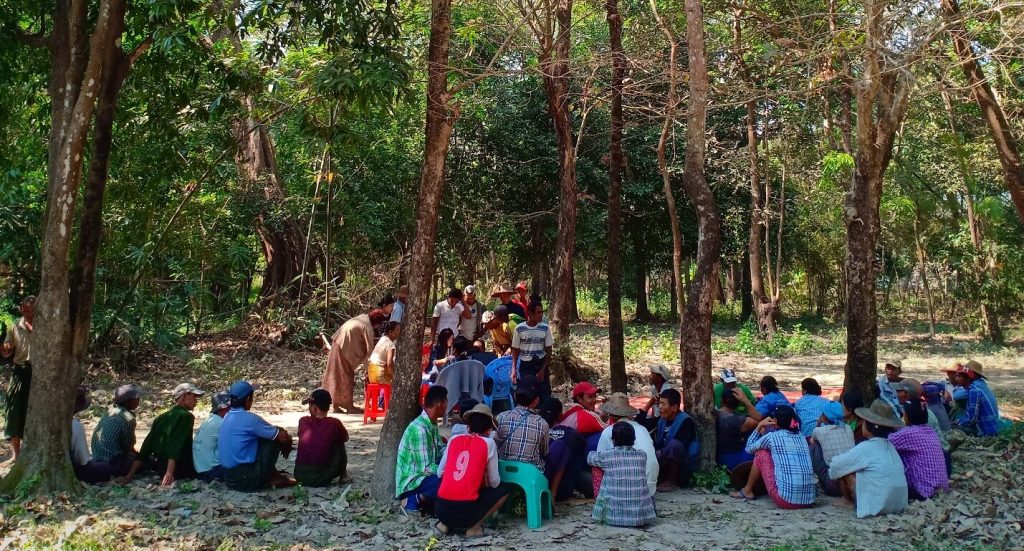
We aid cooperation and legal assistance for the improvement of land ownership and land management activities of vulnerable local people, women, and stakeholders. In addition, we provide support to local officials and forward-thinking officials for sustainable development to be more collaborative in our work.
The aim – In this process, to further promote local people’s land ownership rights, land justice, use and management rights, cooperation with indigenous peoples, legal assistance and strengthening the rights of land conservation and management of natural resources.
To achieve the aim, we provide legal assistance to local indigenous peoples, assist in the process of land ownership, share environmentally friendly farming techniques, and identify traditional systems. In addition, we cooperate with relevant government, parliament and local officials who have progressive views.
We implement to strengthen the land ownership rights of affected local people, indigenous peoples, and women, as well as work for the participation of local people, women, and indigenous peoples in land management systems. In addition, we encourage government officials for the indigenous women to participate in drafting the national land law that covers all land laws.
We identify the customary land use systems used by the locals, carry out land use activities, and carry out activities to conserve mangroves and natural resources. Working with progressive officials to strengthen land ownership, access, and conservation, and providing technical and input support to local communities. In addition, we connect with influential people and work together to encourage small holder farmers and indigenous ethnic groups to achieve good results in strengthening land ownership rights.
With the reforms after 2010, the establishment of confiscation land review committees, enacts laws for land ownership rights, and the protection of customary land systems have been included in the policies. For the recovery of confiscated lands and land ownership rights, the committees established by the relevant government and the committees established by statutory law were carried out. The committees that are formed include members of parliament, farmers, local people, honorable people, and government officials. Those committees were able to deal with undisputed land ownership but were unable to solve the land that had to be confiscated and the land used by residents to a certain extent.
The GPI organization works to help local, indigenous, and other stakeholders better understand the equitable outcomes of these processes. The committees formed according to the relevant government directives and laws were found the weak in ability and according to procedures in land management and decisions to resolve. In addition, there is almost no consideration of the systems and customs used by the locals. For these situations, the GPI organization provides legal assistance and workshops to improve better management systems.
GPI, which is a member of the National Land Law Drafting Committee that covers all land, discussed, and encouraged the participation of women, indigenous peoples, and stakeholders in the land management systems. As a result of such discussion and encouragement, seven sub working groups were further expanded and organized by the order of the National Land Drafting and Harmonization Committee in order to make the drafting of the bill inclusive of all.
Prior to 2010, military land use systems did not recognize customary land systems and were unaware of environmental impacts. Along with the post-2010 reform, land use projects have also had less impact assessment on customary land systems and environmental impacts.
GPI’s legal assistants work together with relevant officials and residents to strengthen customary land use systems by law, reduce climate change, and reduce environmental impact. In addition, it also helps to strengthen cooperation between relevant officials and residents. We are working to strengthen the ability to reduce environmental damage using and maintaining the systematic recording of customary land use systems and the conservation of mangroves and forests, which are collectively maintained by residents.